UMIBADa Vinci · Robotic SurgeryUrología mini invasiva · Buenos Aires
Menu
Clinical philosophy · UMIBA

Judgment before catalog.

The way the center practices is ordered by four premises. They are not institutional slogans: they are the concrete decisions the team and the director make in each case.

Premise 01

Judgment before catalog.

Buenos Aires · 2025 · UMIBA

The premise that orders how the center practices is clinical judgment, not a catalog of procedures. Each case is studied for what it needs, not for what happens to be available to offer.

That discipline changes the clinical conversation. The question is not which surgery to perform; the question is whether surgery is the right indication, and if it is, what the smallest procedure is that resolves the problem safely. The detail of each indication is discussed at the consultation.


Premise 02

Own outcomes, measured and transparent.

Buenos Aires · 2025 · UMIBA

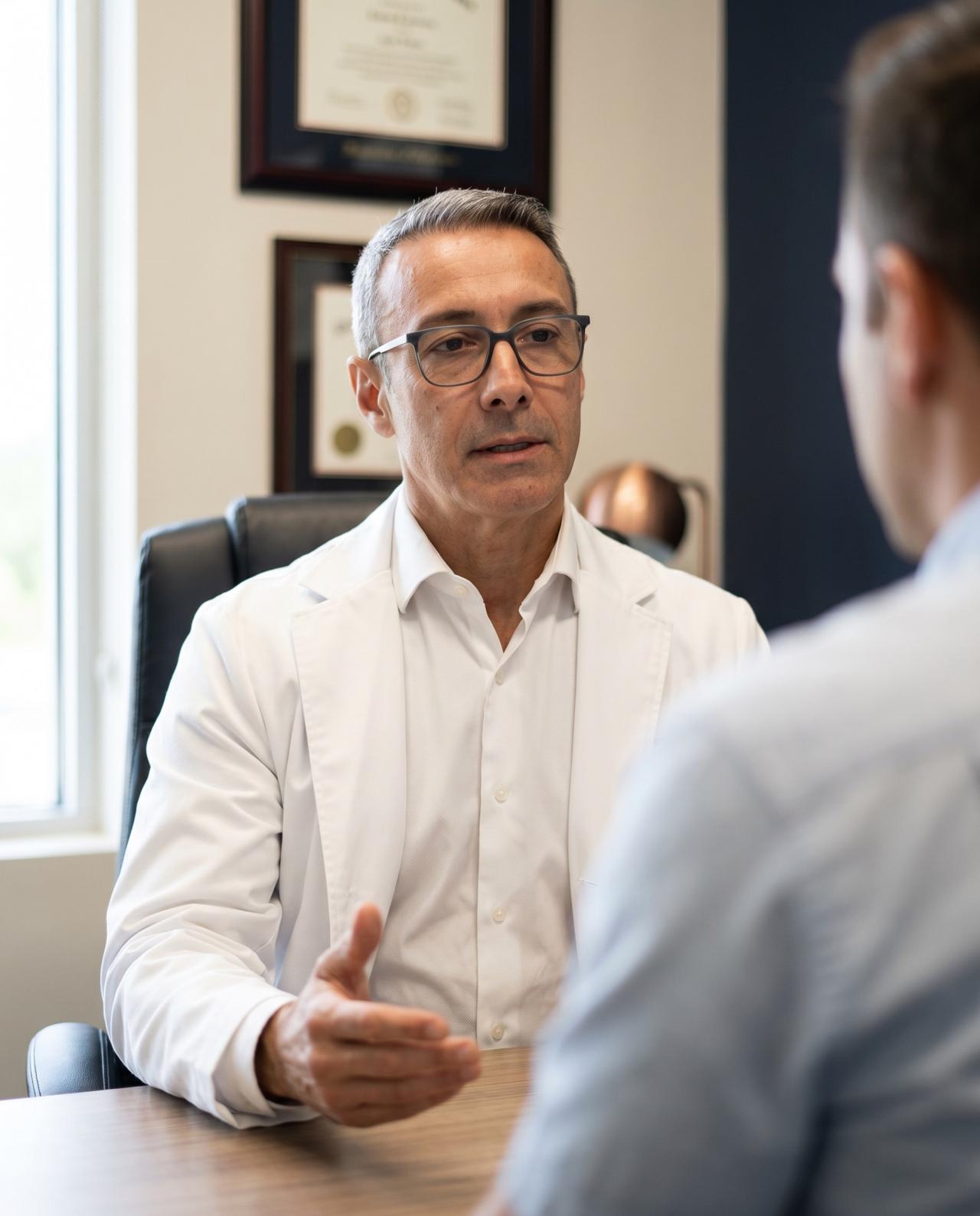
The conversation with the patient is direct, with no promises and the data on the table. The center's own outcomes, measured, not general statistics borrowed from elsewhere. Risks specific to the case, not generic checklists.

That transparency is what distinguishes an academic center from a commercial practice. When the patient decides with real information, expectations align with reality and trust in the team is built on solid ground.

Every patient is different and deserves treatment tailored to their situation, not the automatic repetition of a protocol.

Dr. Gonzalo J. Vitagliano · Medical Director
Premise 03

A second opinion with no obligation.

A patient can request a second opinion with no obligation to be treated at the center. An honest review of the case is worth having on its own, regardless of where the patient decides to continue treatment.

When the second opinion agrees with the previous indication, the patient gains peace of mind. When it differs, the patient gains an alternative to discuss with their own physician. In both cases, the decision remains the patient's.

Premise 04

Minimal invasiveness, maximum patient safety.

When surgery is the right indication, the center's practice seeks the minimal invasiveness that resolves the problem with the maximum safety for the patient. Less aggression on the body, without giving up the result.

That orientation comes from a formative surgical school: that of Dr. Octavio Castillo in urological laparoscopy and that of Dr. Osvaldo Mazza. The criteria they shaped are the ones that order the center's practice today.