Robotic partial nephrectomy with intraoperative 3D navigation
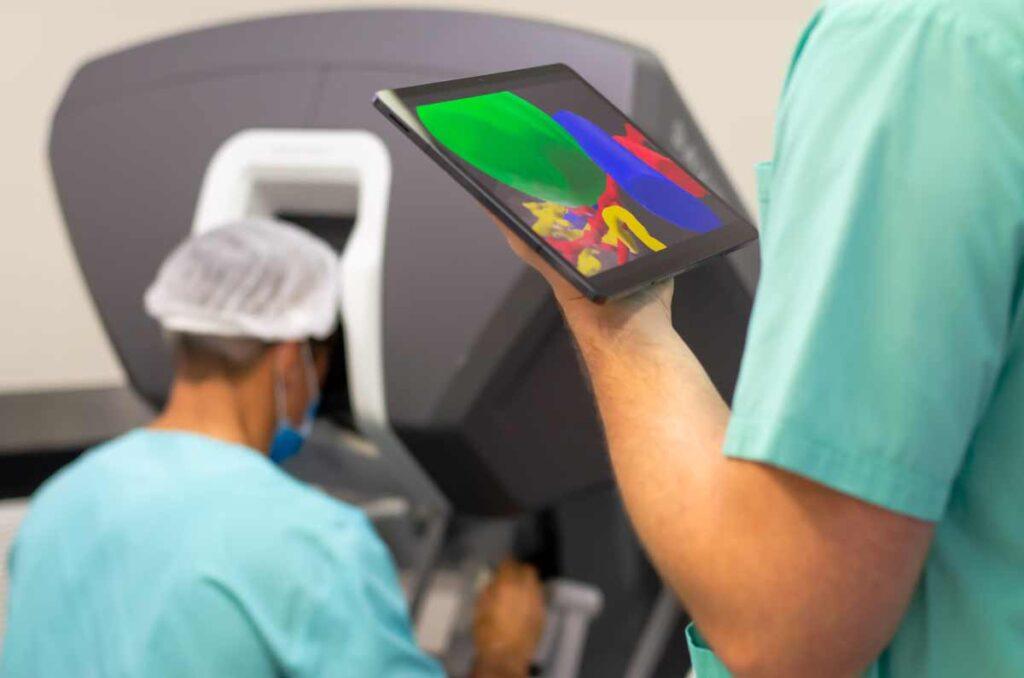
Robotic partial nephrectomy with intraoperative 3D navigation.
Dr. Gonzalo Vitagliano.
Sanatorio Otamendi, Buenos Aires, Argentina.
Here is a case of robotic partial nephrectomy with intraoperative 3D navigation performed by Dr. Gonzalo Vitagliano. This technology let the surgeon handle the 3D model in real time and have precise knowledge of the patient's kidney anatomy as the surgery progressed.
Clinical case
Our 64-year-old patient was having routine check-ups when an ultrasound detected a mass in the right kidney. He therefore consulted his urologist, who ordered a CT scan to confirm the diagnosis. The study revealed an 8 cm tumor on the anterior surface of the right kidney, with a RENAL score of 11a. It was also found that the tumor was in direct contact with the kidney's vascular structures.
3D surgical planning and results in the operating room: why use robotic surgery?
The decision was to operate with the robot because this technology gives the surgeon the technical capacity to handle complex situations. In cases like this, where the tumor is highly complex, the robot gives the specialist greater mobility of the endoscopic instruments, increasing the surgeon's range of motion and precision and making it possible to safely resolve complex partial nephrectomy cases.
In simple or intermediate tumors, using the robot offers no major benefit over laparoscopic surgery. In complex situations, however, such as deep tumors or large tumors that invade a large portion of the kidney, the surgeon needs greater resources to resolve the case. Robotic technology gives the surgeon added precision by eliminating human tremor, easier access to complex or delicate anatomical zones, and less damage to the tissues surrounding the operated area, letting the surgeon perform the procedure more safely.
What was it like to use 3D models during robotic surgery?
Dr. Vitagliano explains how, thanks to the surgical planning, he was able to use the 3D model as a working guide during the operation.
The results from the patient's point of view
The patient told Dr. Vitagliano that he felt calm going into the surgery. He noted that seeing the technology and the care in the surgical preparation, where nothing was improvised, let him enter the operating room with more confidence.
This was reflected in the results: it was possible to preserve the kidney in a surgery that was technically very complex but that, with all this technology, could be resolved safely. Thanks to this, the patient was soon able to go home with a fast recovery. He is currently in excellent shape, returning to his activities completely normally.